
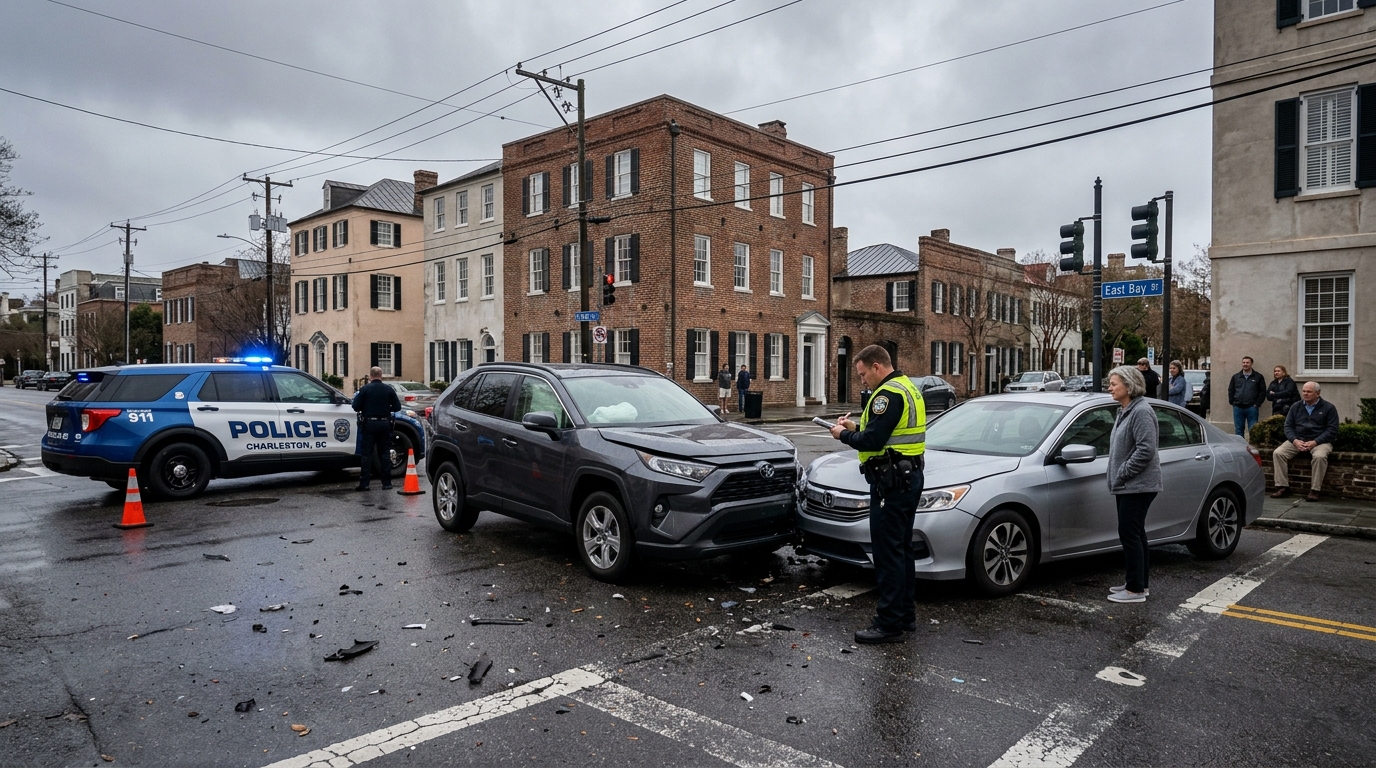
Can You Recover Compensation If You Were Partly at Fault for a Charleston Car Accident?
If you were partly at fault for a car accident in South Carolina, you may still be able to recover compensation. Under South Carolina comparative negligence law, an injured person can generally seek damages when their share of fault is not greater than the fault of the other party or parties. However, any recovery may be reduced by the percentage of fault assigned to the injured person.
For example, if your total damages are $100,000 and you are found 20% at fault, your potential recovery could be reduced by $20,000. If you are found more than 50% at fault, you may be barred from recovering damages from another at-fault party. Every collision involves specific facts, evidence, insurance coverage, and legal issues, so this information is general in nature and not individualized legal advice.
What Is Comparative Negligence in a South Carolina Car Accident?
South Carolina follows a modified comparative negligence rule. In practical terms, responsibility for a crash can be divided among the people or entities involved. A driver does not necessarily lose the right to make a claim simply because they made a mistake before or during the collision.
The key question is whether the injured person’s fault is greater than the combined fault of the party or parties from whom recovery is sought. When an injured person is 50% or less at fault, compensation may remain available, subject to a reduction that reflects that person’s assigned percentage of responsibility. When the injured person is more than 50% at fault, recovery may not be available under this rule.
This framework often matters in collisions involving disputed lane changes, intersections, rear-end impacts, speeding allegations, distracted driving claims, or questions about whether a driver had an opportunity to avoid the crash. A car accident attorney in Charleston can assess how the available evidence may affect the allocation of fault.
How Does a Fault Percentage Affect Injury Compensation?
Fault percentages can have a significant financial effect. The percentage is applied to the total damages that are established, which may include medical expenses, lost income, property damage, pain and suffering, and other legally recoverable losses, depending on the circumstances.
Consider a collision where a claimant proves $80,000 in damages but is assigned 35% of the fault. The potential recovery would generally be reduced by 35%, leaving $52,000. If the claimant were assigned 51% of the fault, the comparative negligence rule could prevent recovery from the other driver.
These examples are simplified. The actual value of a claim can depend on the nature and extent of injuries, available insurance coverage, preexisting conditions, treatment records, the conduct of all involved parties, and other facts. An injury compensation lawyer can help evaluate the issues without assuming that any particular result is guaranteed.
What Evidence Is Used to Determine Fault After a Collision?
Fault is rarely decided by one statement alone. Insurance carriers, attorneys, and courts may consider many forms of evidence when evaluating a Charleston-area crash. The credibility, timing, and consistency of that evidence can be important.
- Police reports and citations issued after the collision
- Photographs of vehicle damage, skid marks, debris, roadway conditions, and traffic controls
- Video from nearby businesses, residences, traffic cameras, or dash cameras
- Statements from independent witnesses and the drivers involved
- Vehicle data, cell phone records, and other electronic information when relevant
- Accident reconstruction analysis in complex or high-impact cases
- Medical records that document injuries and their relationship to the crash
Evidence may be especially important where the parties give different accounts of what occurred. In cases involving commercial vehicles, rideshare services, motorcycles, or pedestrians, there may be additional records and potential sources of evidence. An accident claim attorney in South Carolina can help identify information that should be preserved before it becomes unavailable.
Why May an Insurance Adjuster Try to Shift Blame?
Insurance adjusters investigate claims on behalf of their companies. Because a claimant’s percentage of fault can reduce or eliminate a payment obligation, an insurer may closely examine whether the injured driver contributed to the collision. Assertions about speed, following distance, distraction, visibility, seat belt use, or evasive action may arise during that review.
That does not mean an insurer’s initial position is complete or correct. A statement made at the scene, an incomplete police report, or limited photographs may not capture the full sequence of events. It is important to be accurate and cooperative while avoiding speculation about fault or the severity of injuries before all relevant facts are known.
When liability is disputed, a personal injury law firm in Charleston may review the evidence, communicate with insurers, and evaluate whether an insurer’s treatment of a claim is supported by the facts and applicable law. A Charleston injury lawyer can also explain the practical implications of settlement communications and releases.
What Steps Should You Take After a Charleston-Area Car Accident?
Your safety and medical needs should come first. If you are able to do so safely, taking organized steps after a collision can also help protect important information for a later claim.
- Call law enforcement and request medical assistance when needed.
- Exchange required information, but do not argue about fault at the scene.
- Photograph the vehicles, roadway, visible injuries, traffic signals, weather conditions, and surrounding area.
- Obtain names and contact information for witnesses.
- Seek prompt medical evaluation and follow recommended care.
- Keep copies of medical bills, repair estimates, work-loss documentation, insurer correspondence, and photographs.
- Report the accident to your insurer, while remaining factual and avoiding guesses about responsibility.
- Consider speaking with a car accident attorney in Charleston before accepting a settlement or signing a release.
Prompt action can matter because physical evidence, surveillance video, and witness memories may fade or disappear. It can also be helpful to avoid posting about the accident or injuries on social media while a claim is being evaluated.
When Should You Speak With an Attorney About Shared Fault?
It may be useful to seek legal guidance when an insurer alleges that you caused or contributed to the accident, when injuries are serious, when multiple vehicles are involved, or when the available evidence is unclear. Legal assistance may also be appropriate if a settlement offer does not appear to account for the full impact of documented losses.
Pflug Law Firm approaches civil disputes with a focus on careful fact development, clear communication, and experienced advocacy. For people confronting contested responsibility after a collision in Charleston or elsewhere in South Carolina, Pflug Law Firm can review the circumstances and discuss available options. No attorney can promise a particular outcome, and any assessment depends on the facts of the individual matter.
FAQ
Can I recover compensation if I was 50% at fault for a South Carolina car accident?
Potentially. Under South Carolina’s modified comparative negligence rule, a person who is 50% at fault may generally pursue recovery, but the damages may be reduced by 50%. A person found more than 50% at fault may be unable to recover from another at-fault party.
Does a police report decide who was at fault?
Not necessarily. A police report can be important evidence, but it is not always the final determination of liability. Other evidence, including video, witness accounts, physical damage, and expert analysis, may also affect how fault is evaluated.
Should I admit fault to an insurance company after a crash?
You should provide truthful information, but it is generally wise to avoid guessing, speculating, or making broad admissions before the facts are fully understood. Fault can involve details that are not immediately apparent at the accident scene.
What if the other driver and I both made mistakes?
Both drivers may be assigned a percentage of fault. Your ability to recover and the amount of any potential recovery can depend on whether your assigned fault is 50% or less and on the damages supported by the evidence.
How can Pflug Law Firm help with a disputed accident claim?
Pflug Law Firm can evaluate the available facts, identify relevant evidence, review insurance communications, and discuss the legal issues involved in a contested claim. To discuss your situation, contact Pflug Law Firm at 843-927-2335.